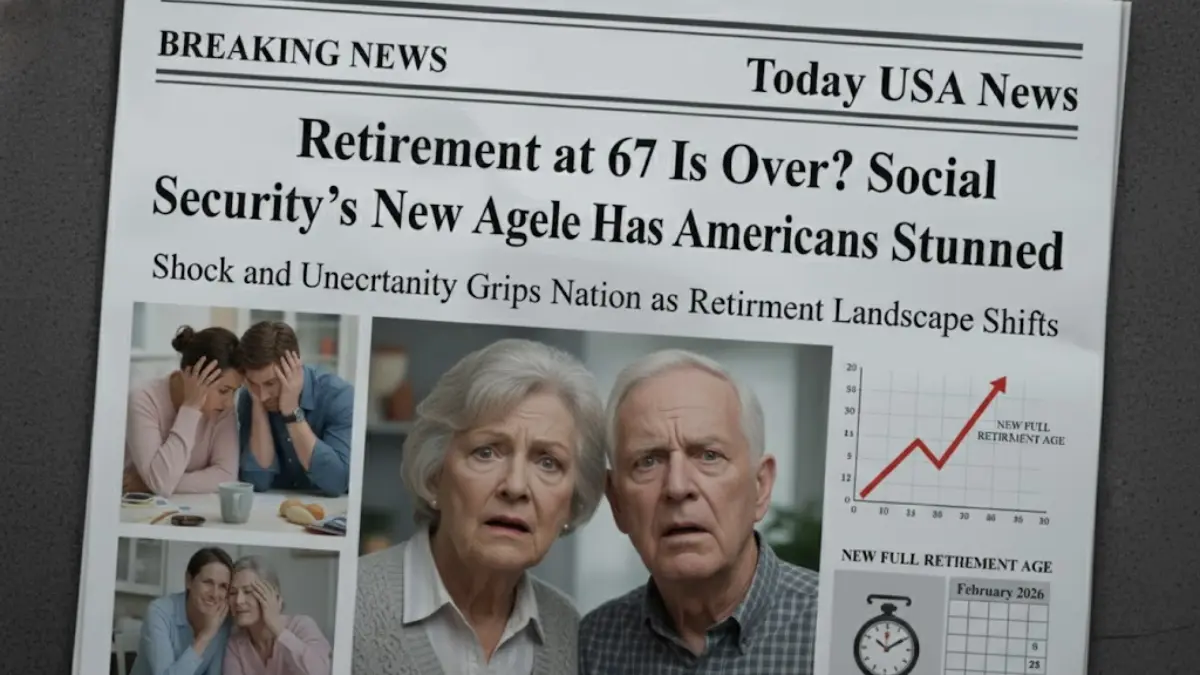
A fresh wave of headlines is fueling confusion across the country, with many asking whether retirement at age 67 is officially over. As discussions around Social Security reform continue, Americans are trying to understand if the full retirement age is rising again and what it means for future benefits.
What the Current Full Retirement Age Actually Is
Under existing law, the full retirement age for Social Security benefits gradually increased from 65 to 67 for individuals born in 1960 or later. For those turning 62 in 2026, full retirement age remains 67.
There has been no official change eliminating retirement at 67. However, policy discussions about future adjustments have sparked concern.
Why Talk of a Higher Retirement Age Is Growing
Longer life expectancy and financial pressure on the Social Security trust funds have led lawmakers to explore potential reforms. One idea often debated is raising the full retirement age beyond 67 for younger generations.
Such proposals are typically framed as long term sustainability measures rather than immediate changes for current retirees.
How Raising the Retirement Age Would Affect Benefits
If the retirement age were increased in the future, it would not eliminate early retirement at 62. Instead, it would adjust the age at which full benefits are received.
• Early retirement would still be possible with reduced monthly payments
• Full retirement age could gradually rise for younger workers
• Delayed retirement credits would continue increasing benefits past full age
• Current retirees would likely remain unaffected
Changes, if approved, would likely be phased in over many years.
Social Security Retirement Age Overview
| Birth Year | Full Retirement Age |
|---|---|
| 1955 | 66 and 2 months |
| 1958 | 66 and 8 months |
| 1960 or later | 67 |
| Proposed Future Adjustments | Under discussion only |
No official legislation has moved the age beyond 67 at this time.
Who Should Be Paying Attention
Workers in their 30s and 40s may face the greatest impact if long term reforms are adopted. Individuals closer to retirement are generally protected from sudden age shifts under previous reform models.
Understanding personal retirement planning options remains essential regardless of policy debates.
Why Confusion Is Spreading Online
Viral headlines often present proposed reforms as finalized changes. In reality, any adjustment to the Social Security retirement age would require congressional approval and a structured implementation timeline.
Speculation does not equal enacted policy.
Conclusion:
Retirement at 67 is not officially over. While discussions about raising the Social Security retirement age continue, no confirmed rule has eliminated age 67 as full retirement. Americans should stay informed but avoid reacting to speculation without verified legislative action.
Disclaimer:
This article is for informational purposes only. Social Security policies can change through legislative action, and readers should consult official government sources for confirmed updates.